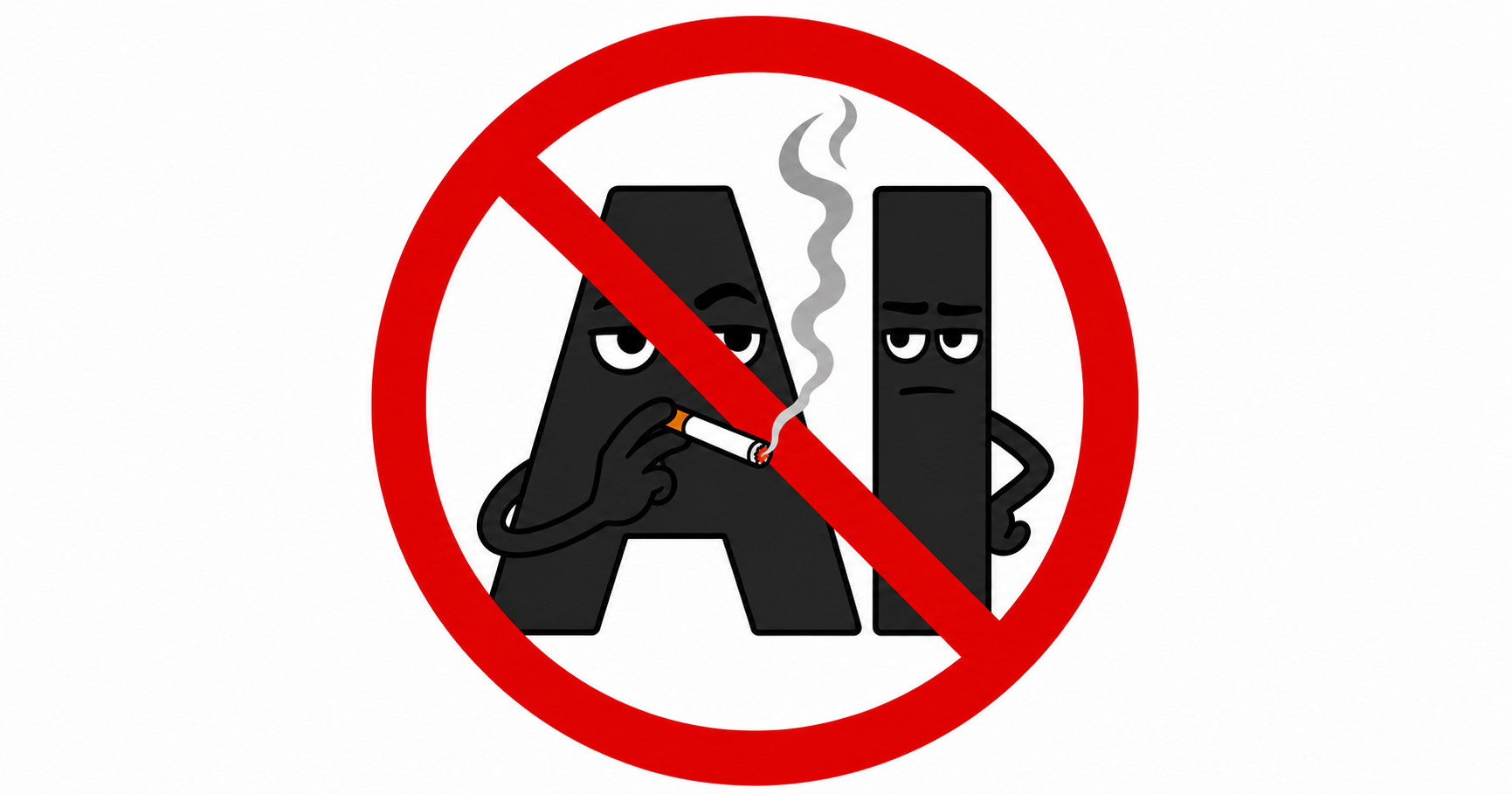
There are plenty of valid reasons to feel skeptical about artificial intelligence.
You may be concerned about accuracy, privacy, copyright, job displacement or the growing amount of generic, automated content filling the internet. You may simply prefer working with real people and believe creativity, strategy and communication should remain human-led.
That is fair.
But choosing not to use AI to create your work is different from making it difficult for AI-powered tools to understand and recommend your business.
Whether you love AI, dislike it or remain somewhere in the middle, the way people find information online is changing. Your website needs to be prepared for that change.
AI-Friendly Does Not Mean AI-Generated
Making your website AI-friendly does not mean filling it with content generated by ChatGPT.
It does not mean replacing your writer, designer, strategist or customer service team. It does not mean adding a chatbot to your homepage or automating every interaction with your customers.
An AI-friendly website is simply one that clearly communicates:
- Who you are
- What you offer
- Who you serve
- Where you work
- Why someone should trust you
- How a person can take the next step
Those are not exclusively AI practices. They are the foundations of a strong, accessible and useful website.
The difference is that your website is no longer communicating only with human visitors and traditional search engines. AI-powered search tools are also interpreting your content to answer questions, compare services and recommend potential resources.
Your Customers Are Already Using AI
You may never use an AI platform to find a business. Your customers might.
Instead of searching for “Kansas City leadership consultant,” someone may ask:
Who is a good leadership consultant in Kansas City for a growing nonprofit?
Instead of searching for “industrial relocation company,” a business owner may ask:
What type of consultant can help us move a manufacturing facility without interrupting operations?
Instead of visiting five websites and comparing service pages, people can now ask AI tools to help them understand their options before they ever contact a company.
Microsoft has noted that people increasingly explore information through conversations, ask follow-up questions and develop confidence before visiting a website. Bing Webmaster Tools now even provides reporting about how publisher content appears in Microsoft Copilot and other AI-generated experiences.
Your prospective customers do not need your permission to search this way.
The real question is whether these tools can understand enough about your business to include it in the conversation.
Being Invisible Is Still Being Invisible
Some business owners assume they can ignore AI and continue focusing exclusively on traditional SEO.
The problem is that AI-powered discovery is increasingly becoming part of search itself.
Google’s AI Overviews and AI Mode use web content to respond to more complex, conversational questions while directing users to supporting websites. Google says the same foundational practices used for traditional search—crawlable pages, helpful content, clear internal links, good page experiences and accurate information—also help websites appear in its AI experiences.
OpenAI similarly explains that websites may need to allow its search crawler, OAI-SearchBot, for their content to appear in ChatGPT search results. It also distinguishes this search access from GPTBot, which publishers can block when they do not want their content used for potential model training.
That distinction matters.
You can make intentional decisions about how your content is accessed without disappearing entirely from emerging search experiences.
Rejecting every form of AI access may feel like taking a stand, but it could also make your organization harder to discover.
What Makes a Website AI-Friendly?
There is no magic button, secret “AI schema” or guaranteed formula for being recommended by an AI platform. Google specifically says website owners do not need a special AI text file or unique schema markup to appear in its generative search features.
The strongest approach is much less gimmicky.
Use clear, specific language
Avoid vague statements such as:
We provide innovative solutions that help organizations achieve more.
What kind of solutions? Which organizations? What results?
A stronger version would be:
We help Kansas City nonprofits develop clear brand strategies, improve their websites and create communications that increase community engagement.
Clear language helps people and technology understand your value.
Answer the questions customers actually ask
Your website should address questions such as:
- What does this service include?
- Who is it designed for?
- What problems does it solve?
- How does the process work?
- Where is the service available?
- What makes your approach different?
- What should someone expect before contacting you?
These answers can appear throughout your service pages, case studies, FAQs and blog content.
Build depth around your expertise
A five-page website filled with broad marketing language gives search and AI tools very little evidence of your expertise.
Useful websites provide substance.
Create detailed service pages. Explain your process. Share meaningful case studies. Publish original insights. Define industry-specific terminology. Include examples of the problems you solve and the outcomes you help create.
Google continues to emphasize helpful, reliable, people-first content rather than mass-produced pages created only to influence search rankings.
Make your content technically understandable
Important information should be available as actual text—not hidden inside graphics, videos or downloadable PDFs alone.
Pages should have descriptive titles, logical headings, useful internal links and accurate structured data where appropriate. Structured data can help search systems understand information about organizations, services, people, products and other subjects, although it should always match the visible information on the page.
Show evidence that your business is real
Include relevant trust signals:
- Staff names and professional backgrounds
- A physical location or clearly defined service area
- Original photography
- Case studies
- Testimonials
- Client or project examples
- Professional memberships
- Contact information
- Updated business profiles
- Consistent information across the web
AI tools should not have to guess whether your business exists, what it does or where it operates.
Human Expertise Matters More, Not Less
Making your website AI-friendly does not require you to surrender your voice.
In fact, original human expertise may become even more valuable as the internet fills with repetitive, surface-level content.
Your perspective, experiences, methods, opinions and results are difficult to duplicate. That is the material that differentiates your organization—not only for AI systems, but for the people who eventually reach your website.
The goal is not to sound like a machine.
The goal is to make your human expertise clear enough that machines can accurately introduce it to other humans.
You Don’t Have to Like the Change to Prepare for It
Businesses have adapted to search engines, mobile devices, social media, online reviews and voice search. Not every organization welcomed those changes, but ignoring them did not stop customers from adopting them.
AI-powered search is another evolution in how people find, evaluate and choose businesses.
You can remain thoughtful about how you use AI. You can establish ethical boundaries. You can protect your original work, block training crawlers where appropriate and continue creating content with real human insight.
But your website should still be clear, accessible, authoritative and easy to understand.
That is not chasing a trend.
It is protecting your visibility.
Just because you do not like AI does not mean your future customers will not use it to look for exactly what you offer.
Not Sure If Your Website Is Ready for AI Search?
You don’t have to embrace every AI trend to make sure your business can still be found, understood and trusted.
A clearer website can support traditional SEO, AI-powered search and the real people looking for what you offer.
That’s where I come in.
- Clarify what your website communicates
- Identify SEO and AI-search opportunities
- Strengthen your service pages and website content
- Build a digital foundation that can adapt as search changes
Because you don’t have to love AI to prepare your website for it.
Leave a Reply